
Early Reading and Phonics
Phonics

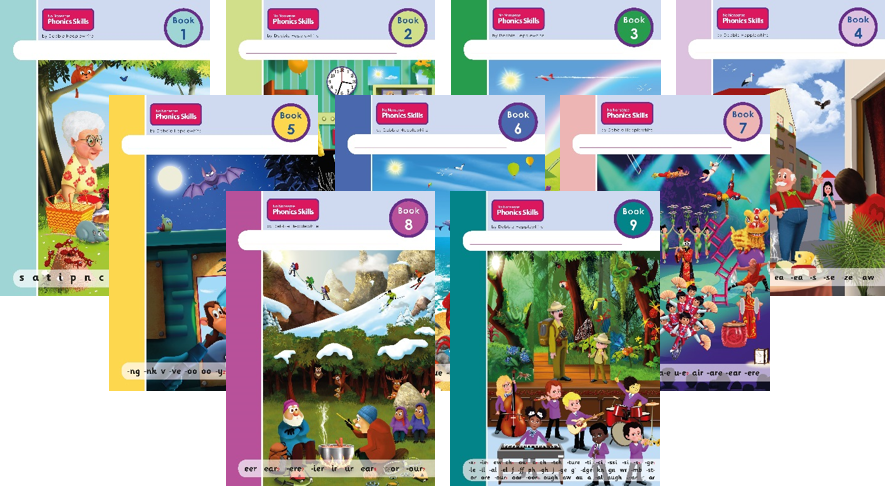
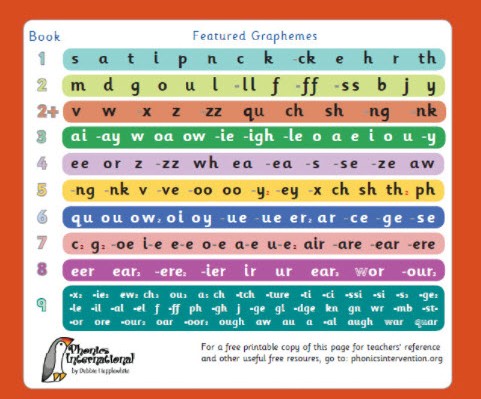
We have adopted the DfE accredited synthetic phonics programme of No Nonsense Phonics Skills. This booklet-based approach, which arranges the alphabetic code over 11 booklets, begins in F2 when children join our reception class. We have chosen this aspirational approach as it covers the Five Pillars of Literacy – phonemic awareness, phonics, vocabulary, fluency, language comprehension – which we believe are vital to all of our learners. Our aim is to have all children reading as quickly as possible.
The programme uses a two-pronged approach of both systematic daily teaching, and also "incidental" teaching of any letter-sounds-correspondences (known as "codes") that pupils need for their reading or their writing. In this way, no child is held back from being able to read or spell whatever they would like to.
Nursery
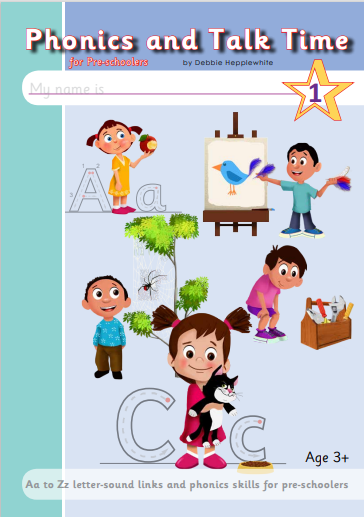
In order for children to be ready to start this programme as soon as they start school, we have a rigorous approach to pre-phonics skills in our nursery. We use Teeny Reading Seeds. This has been written by the same author as No Nonsense Phonics Skills as the perfect starting point for preschool children. This approach raises children's awareness of print in the environment; it teaches essential phonemic awareness skills, including oral blending and segmenting, which are vital precursors to phonics learning; and it introduces the children to letters of the alphabet, both upper and lower case, using the same pictorial mnemonics (memory aids) as the No Nonsense Phonics Skills approach. In this way, the transition to systematic phonics teaching in our reception classes is seamless.
Teaching and Learning Cycle – FS2 and KS1
No Nonsense Phonics Skills has a Teaching and Learning Cycle which we follow rigorously. In most cases, a new piece of code (a letter-sound correspondence) is taught over two days. Session 1 is a "multi-skills" lesson where a new code is introduced and children explore this at code and word level (in Book 9 this is a spelling session). Session 2 is a "mini-story" lesson which enables children to apply the new code taught on the previous day through a longer piece of text.

Spelling
When children are taught spelling within the phonics sessions, we use a "sound dash" approach as required by No Nonsense Phonics Skills. Children are asked to orally segment the word and to count the sounds they hear. They write a dash for each sound heard. These dashes serve as the line for children to write the letter/s on. Whilst it is developmental for children to use phonetically plausible spellings, within the phonics lesson, children will be taught to focus on choosing the correct code. When giving feedback, the teacher will praise children for hearing the sounds, but will provide feedback on how to choose the correct spelling using the working wall and the code charts. Outside of phonics lessons, children will be expected to correctly apply the codes they have been taught, and where necessary, will be given feedback linked to this. In some cases, it is appropriate to use the code charts and "incidentally" teach a new piece of code such that a pupil can use the correct spelling even if the code has not yet been covered within their phonics lessons.
Year 1 – Phonics Screening Check
In Year 1, pupils are required to undertake an assessment called the Phonics Screening Check. This usually takes place in June and is to confirm whether they have reached an age-appropriate standard of reading.
Children are well-prepared for this with regular practise during the school year. Staff are experienced in ensuring that children are familiar with the process and are as relaxed as possible. The Phonic Screening Check tests the pupils’ knowledge of codes and blending, by applying these to both real and nonsense/alien words.
If you have any further queries regarding the Phonics Screening Check, please speak to your class teacher.
Reading
Daily Reading & Decodable Books
We want our children to feel confident in reading, and aim to inspire a love for this early. Therefore, we prioritise Early Reading. Books are allocated based upon the codes that the children have learnt in order, this enables them to have books that match their code knowledge. These are known as 'decodable books'. Books are carefully allocated by school staff to ensure they are at an appropriate level for the children to read, as we ultimately want to ensure success, engagement and enjoyment of reading.
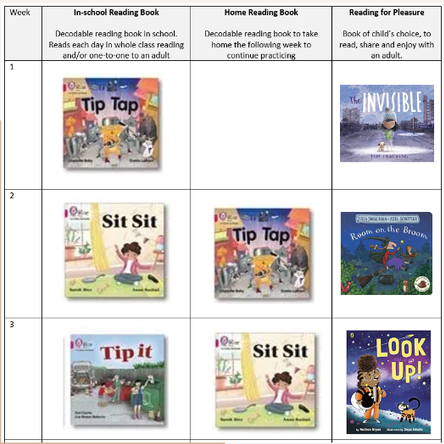
To ensure children have plentiful opportunities to revisit, practice and enjoy reading, we follow a three-book approach for children in EYFS, KS1. Children who continue to require support with their Phonic knowledge will also follow this approach. It includes:
- A reading for pleasure book, chosen by the child.
- A decodable book, chosen by the adult dependent on their knowledge of codes (sounds).
- A decodable book, chosen by the adult from the previous week. This is to revisit and gain further fluency with the familiar text/storyline.
In FS2 and KS1, pupils also have access to the mini-story, taken from their phonic lesson that week to allow for additional practice of a new code.
Early Reading in KS2
Children in Key Stage 2 who haven’t passed the Phonics Screening, will continue to receive tailored phonics interventions, following the No Nonsense Phonic Scheme, that specifically focusses on gaps in their learning. Children will continue to be assessed each half-term and their reading texts will be chosen appropriately by a member of staff. The children will select a reading for pleasure book to take home, along with their decodable text.
Reading for Pleasure
Reading for Pleasure is a culture that is embedded throughout school. We aim to promote a love and enjoyment of reading to enable children to succeed in school and into adulthood. Research shows that the impact of reading can develop children's self-esteem, confidence and well-being whilst giving them an insight into the wider world.
We do this by:
- Holding weekly reading mornings with parents and carers to share books and stories in EYFS.
- Create high-quality reading spaces within the classroom and throughout the whole school environment. Our class libraries emphasise our love of books, texts and reading.
- Trips to the local library, immersing the children within their local community and exploring the range of books on offer.
- Class novels to promote a love of reading.
Home Reading
We know that the more a child reads, the better their academic progress, as learning to read is the gateway into to all areas of the curriculum. We foster the approach to first learn to read and then read to learn. Home reading is a crucial part of this and we encourage all our pupils to read at least 3 times a week.
At Forest Glade, we are passionate that all children should be given the skills to read fluently and confidently, and by implementing a consistent approach to the teaching of Phonics and Early Reading we are giving them the best possible start on their reading journey.
Please see the videos below showing how to support your child at home. They are arranged in the order of the colour book bands, and once a child is beyond Turquoise, the videos are for free-choice books.